
How to Spot Marine Life While Scuba Diving in Maui
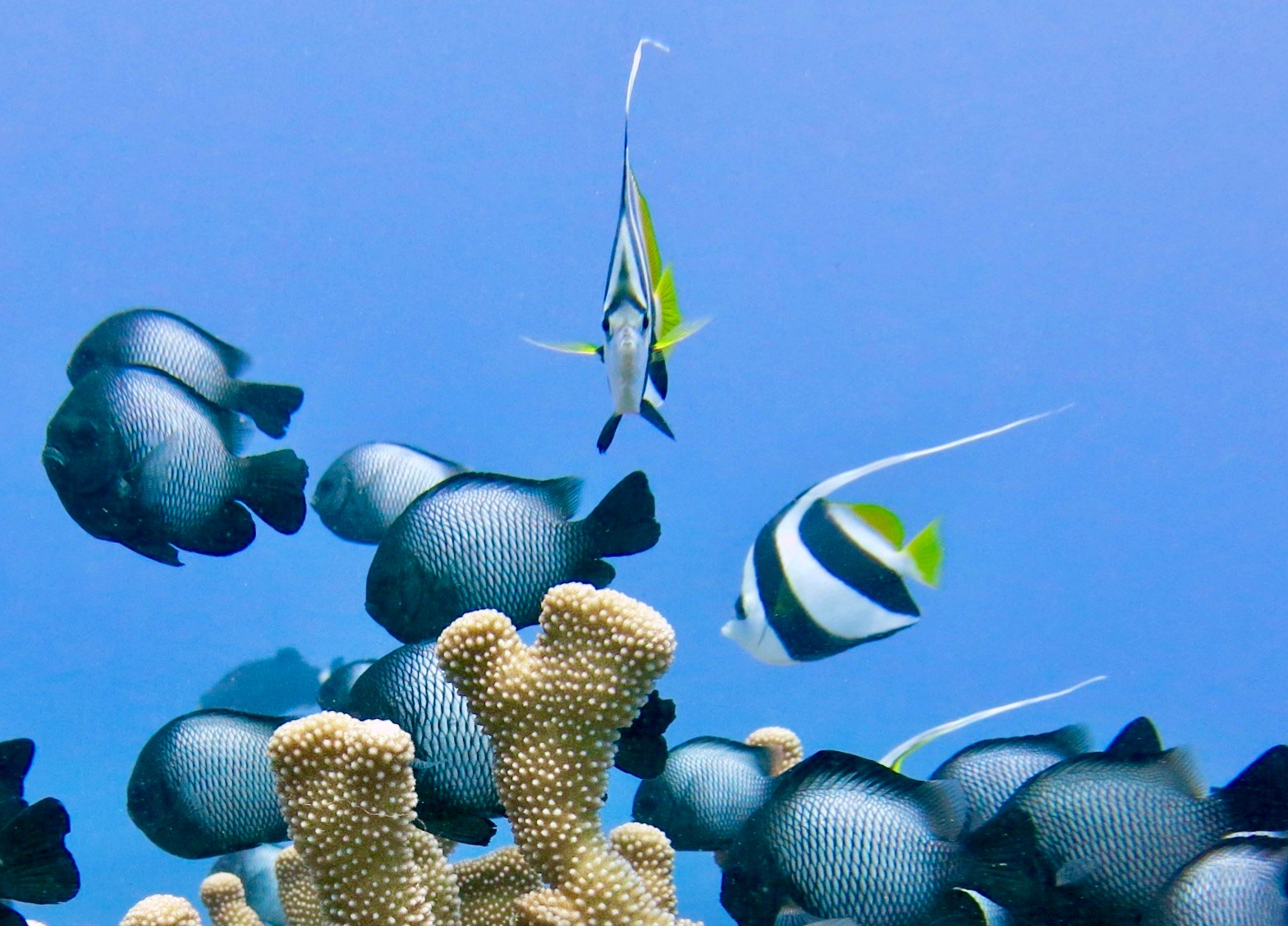
One of the most rewarding parts of scuba diving in Maui is discovering marine life you might swim past at first glance. Some animals are easy to notice, while others blend into coral, sand, rock, or the reef’s structure.
Learning to spot more marine life is less about swimming farther and more about slowing down, staying aware, and knowing where to look. Small movements, unusual textures, eyes, outlines, and color changes can all reveal animals hiding in plain sight.
Whether you’re looking for a camouflaged scorpionfish, a tiny nudibranch, a moray eel tucked into the reef, or a sea turtle moving through open water, these techniques can help you become a more observant diver.
Slow Down and Cover Less Area
One of the simplest ways to see more underwater is to slow down. Divers who move quickly across a large section of reef can easily miss small or well-camouflaged animals.
Instead of constantly moving forward, pause occasionally and examine a smaller section of reef. Let your eyes adjust and look for details that seem slightly out of place.
At a site such as Airport Beach in Ka’anapali, scorpionfish blend almost perfectly with rock, sand, or coral. You may notice the animal only after seeing an eye, a fin, or a subtle movement.
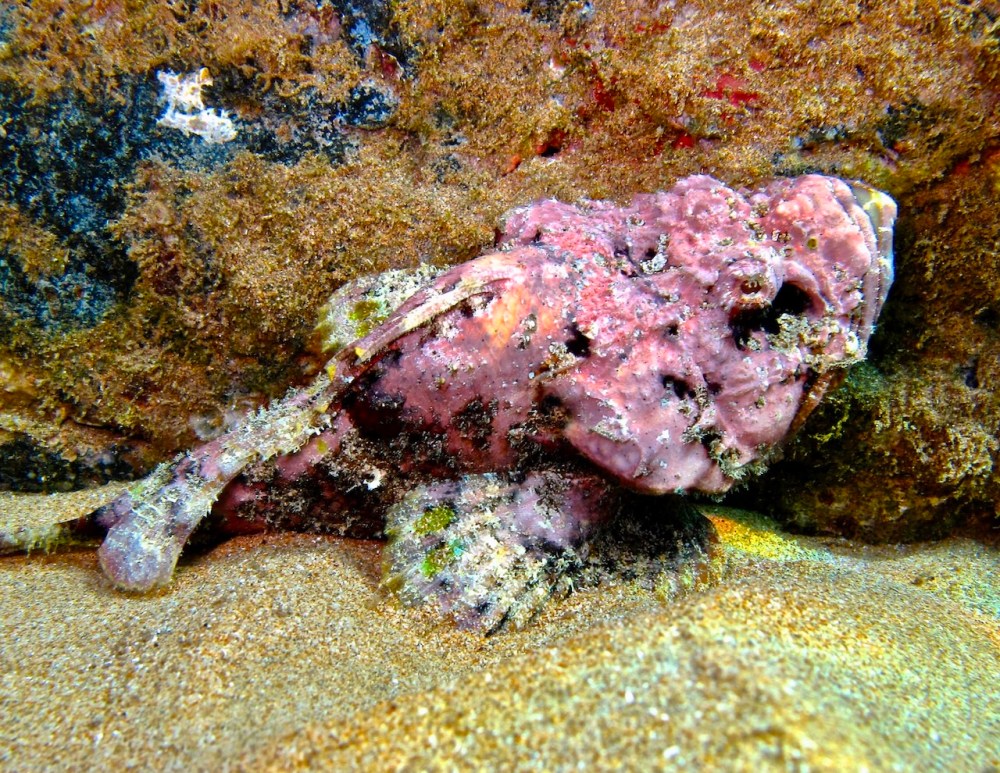
A scorpionfish rests beside a reef rock on the sandy bottom.
Look for Movement Before You Look for the Whole Animal
Camouflaged marine life is often easier to notice by movement than by shape. Instead of trying to recognize an entire fish immediately, watch for smaller clues such as:
- An eye moving
- A fin shifting
- Gills opening and closing
- A tail extending from a crevice
- A change in texture or pattern
- Something moving differently from the surrounding reef
Once your eye notices one of these details, the rest of the animal often becomes much easier to see.
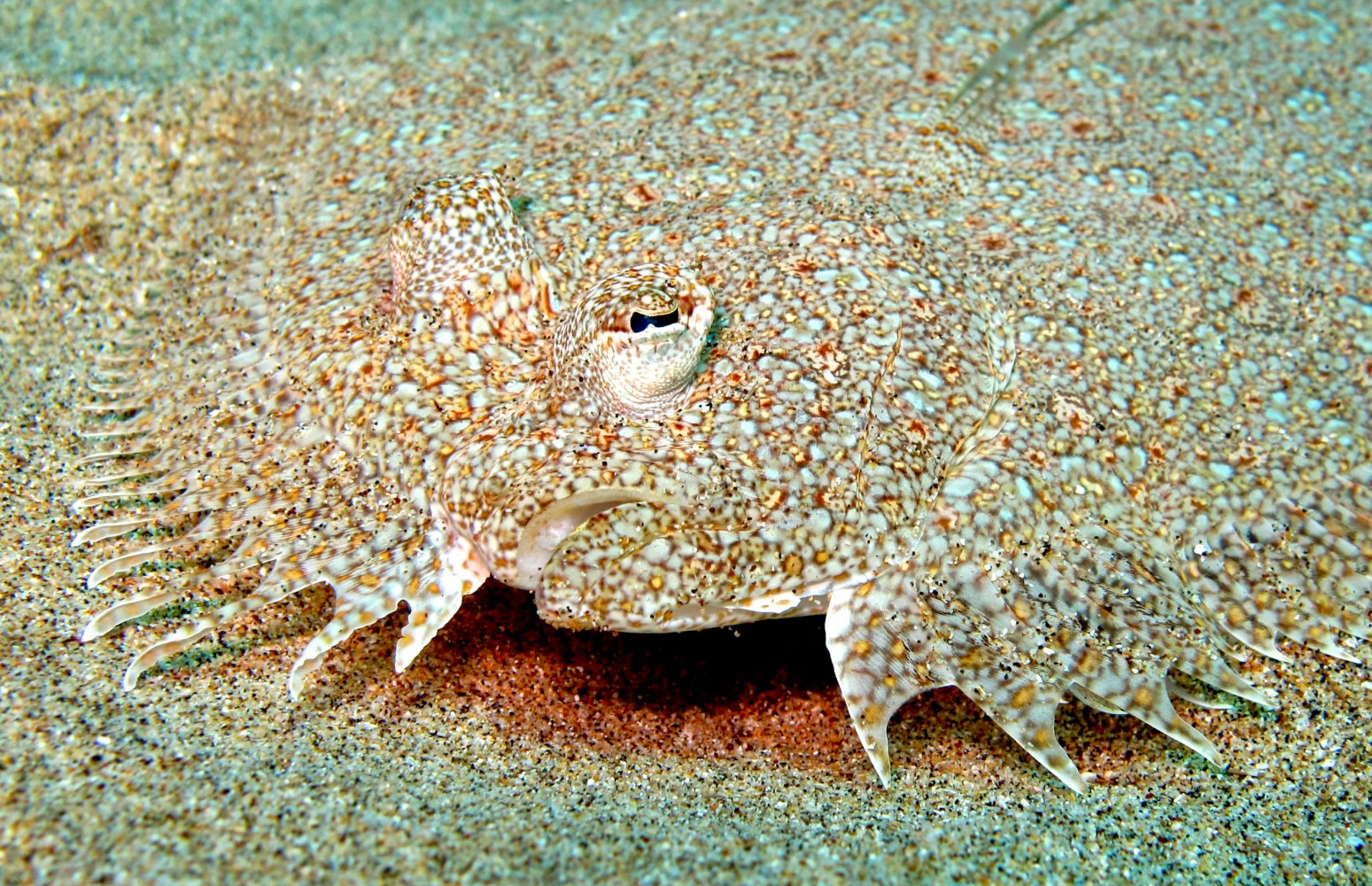
A peacock flounder blends into the sand with its flattened body and speckled markings.
Learn Where Different Animals Like to Hide
Marine animals often favor particular habitats. As you gain experience, learning these patterns can make spotting wildlife much easier.
Moray eels may shelter in reef openings and crevices. Nudibranchs move slowly across reef surfaces. Some bottom-dwelling fish rely heavily on camouflage around sand, rubble, coral, or rock. Sea turtles may rest near reef structure or swim through more open areas.
You do not need to memorize every species. Noticing where you found an animal can help you recognize similar habitats on future dives.
For help identifying animals you may encounter, visit our Maui Fish Guide.
Improve Your Buoyancy and Trim
Good buoyancy control makes it easier to observe marine life because you can slow down, hover, and change your viewing angle without constantly correcting your position.
Certified divers who are comfortable maintaining neutral buoyancy can focus more attention on the reef instead of constantly correcting their position. Good buoyancy also helps reduce accidental contact with coral and other marine life.
Change Your Perspective
It is easy to become focused on one part of the reef and miss what is happening elsewhere. Good marine-life spotting means regularly changing your perspective.
Look close to the reef for smaller animals, but also glance into open water. When appropriate, look under ledges, along the edges of reef structure, across sandy areas, and occasionally behind or above you.
At Mala Wharf, for example, one diver may focus on a small nudibranch on the structure while a turtle passes through nearby. Neither view is wrong—the key is remembering to alternate between close-up searching and the wider environment.
Look for Shapes and Textures That Don’t Fit
Camouflage works because an animal resembles its surroundings, so another useful technique is to look for shapes or textures that seem slightly unusual.
A line that looks too straight, a patch of reef with a different texture, a pair of symmetrical eyes, or an outline that does not quite match the surrounding coral can reveal an animal you initially overlooked.
The more time you spend observing reefs, the faster your brain becomes at recognizing these visual clues.
Don’t Forget the Open Water
Not everything worth seeing is hiding in the reef. While searching for small animals, periodically look up and scan the surrounding water.
Fish schools, turtles, rays, and other animals may pass by while you’re focused on something much smaller.
A good habit is to alternate between three areas:
- Close-up reef detail
- The immediate area around you
- Open water farther from the reef
Use Your Dive Guide’s Knowledge
Local dive guides spend a lot of time at the same Maui dive sites and often learn where certain species are commonly found or which parts of a reef are worth examining closely.
That doesn’t mean wildlife is guaranteed. Ocean conditions and animal behavior change from day to day. But following your guide and paying attention to where they are looking can help you recognize habitats and spotting techniques you can use on future dives.
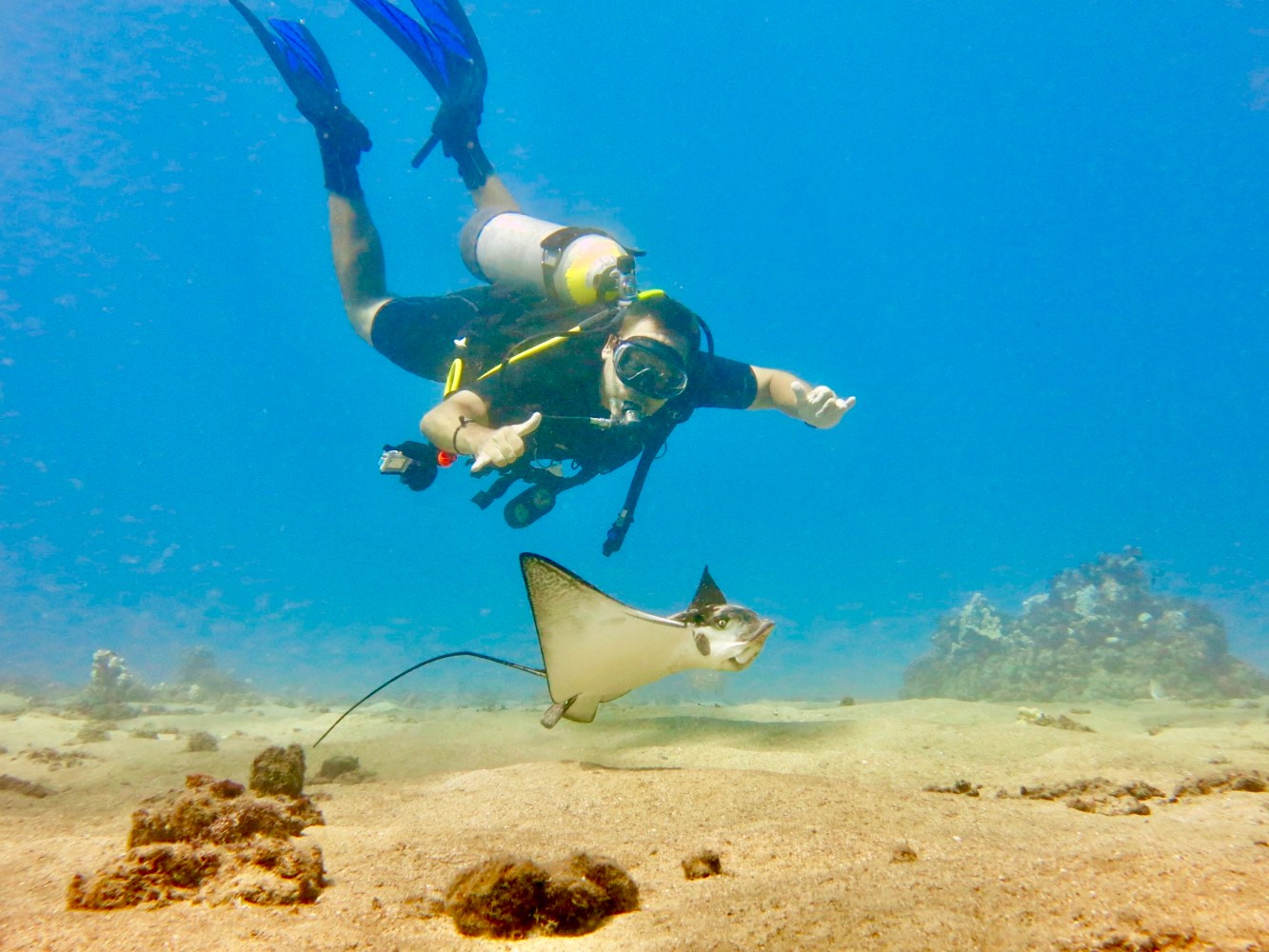
Get comfortable underwater again with a scuba refresher and guided shore dive in Ka’anapali: Observe Marine Life Without Disturbing It.
Finding an animal doesn’t mean you need to get closer. The goal should be observation, not interaction.
Avoid touching, chasing, feeding, cornering, or deliberately changing an animal’s behavior. Give wildlife room to move naturally, maintain control of your equipment, and avoid contacting coral or other reef habitat.
Some protected marine animals also have specific viewing laws or recommended distances. In Hawai’i, NOAA advises viewing wildlife respectfully and never touching, chasing, or feeding marine animals. NOAA Fisheries
For example, NOAA recommends staying at least 10 feet away from sea turtles in Hawai’i on land and in the water.
What Marine Life Can You See While Scuba Diving in Maui?
Maui’s waters support a wide variety of marine life, and what you encounter varies by dive site, season, conditions, and simple chance. Depending on the location, divers may encounter tropical reef fish, moray eels, nudibranchs, octopuses, sea turtles, rays, reef sharks, and many smaller animals hidden around the reef.
Wildlife encounters are never guaranteed, which is part of what makes every dive different.
Explore our Maui Fish Guide to learn more about the species you may encounter while scuba diving around Maui.
Where to Practice Marine-Life Spotting in West Maui
Different dive sites offer different habitats and opportunities to practice your observation skills.
Airport Beach in Ka’anapali, also known as Kahekili Beach Park, offers reef habitat where divers can slow down and search for both larger reef fish and smaller animals that blend into the surrounding structure.
Mala Wharf in Lahaina
The underwater remains of Mala Wharf create complex habitat with concrete structure, openings, reef growth, and surrounding sand. Certified divers may encounter turtles, reef fish, moray eels, nudibranchs, reef sharks, and other marine life depending on conditions and animal activity.
New to Scuba Diving?
First-time divers do not need advanced marine-life spotting skills before trying scuba. On an introductory dive, you’ll really focus on breathing, equipment, communication, and getting comfortable underwater.
As those skills become more natural, you can gradually spend more time observing the reef around you.
Banyan Tree Divers offers Beginner Scuba Diving in Ka’anapali for guests with no previous scuba certification or experience. Our beginner groups are limited to four non-certified divers per instructor.
Certified Diver?
Certified divers who want to explore West Maui with a local guide can choose from guided shore dives in Ka’anapali and Lahaina, with dive-site orientation and help identifying marine life and habitats that are easy to overlook.
Explore Maui’Maui’srwater World
To spot more marine life, slow down, control your position, change your perspective, and learn which visual clues to watch for. You do not need thousands of dives to become a better observer—attention and practice can make a noticeable difference on almost any dive.
Whether you’re scuba diving for the first time or you’re already certified, take your time underwater. Look closely, look around, give wildlife plenty of space, and enjoy the animals you happen to encounter that day.